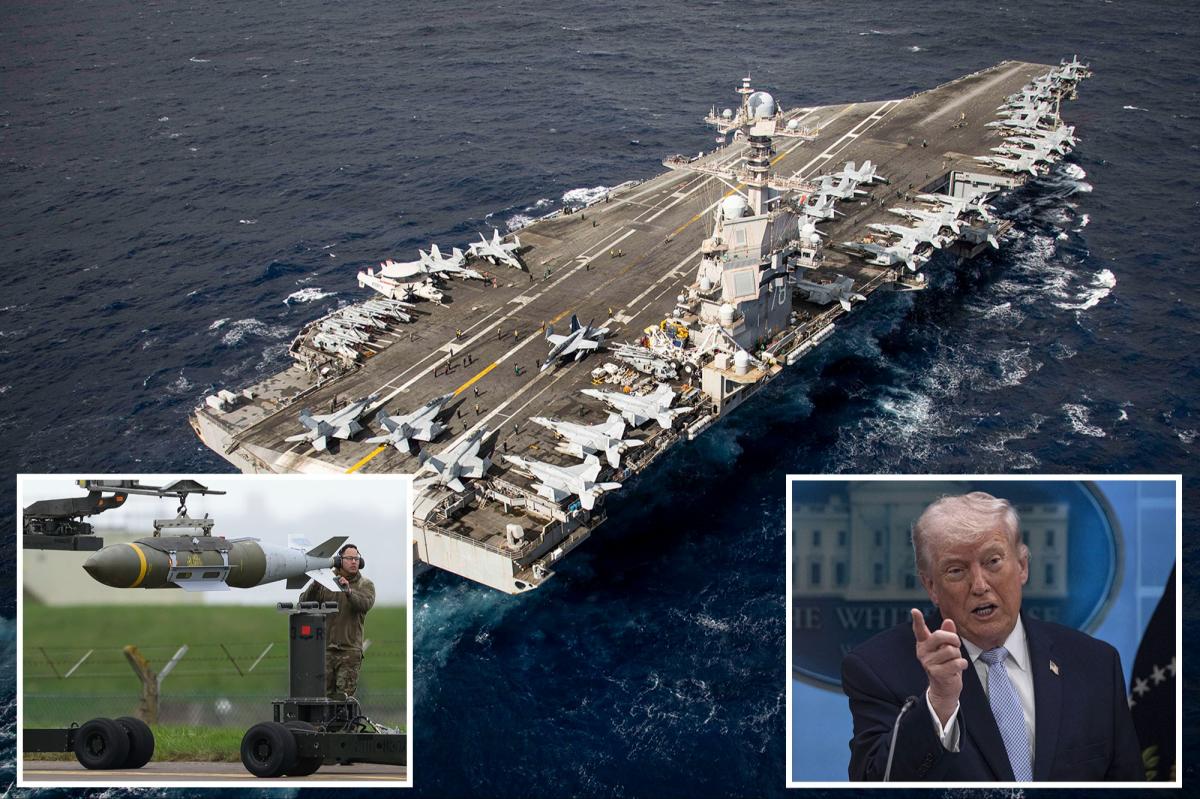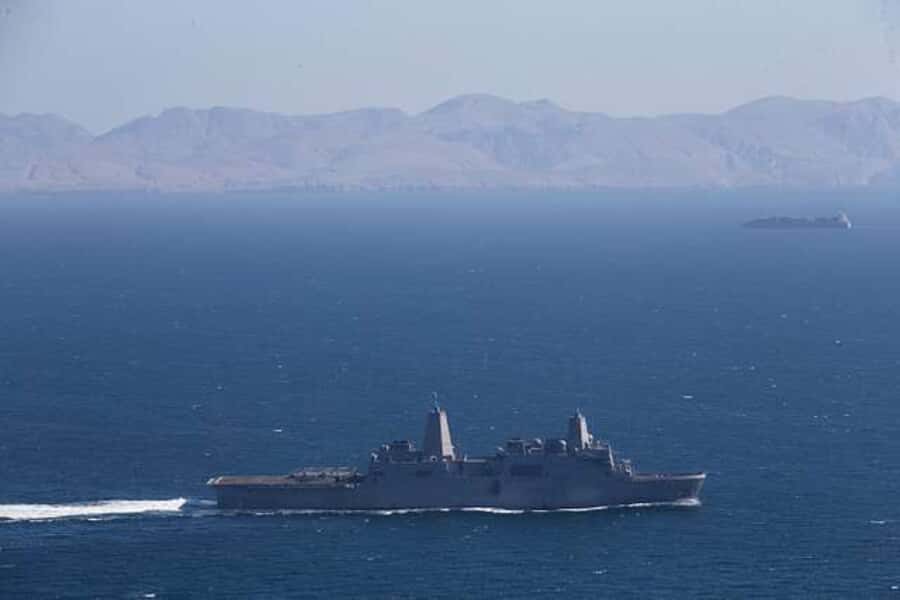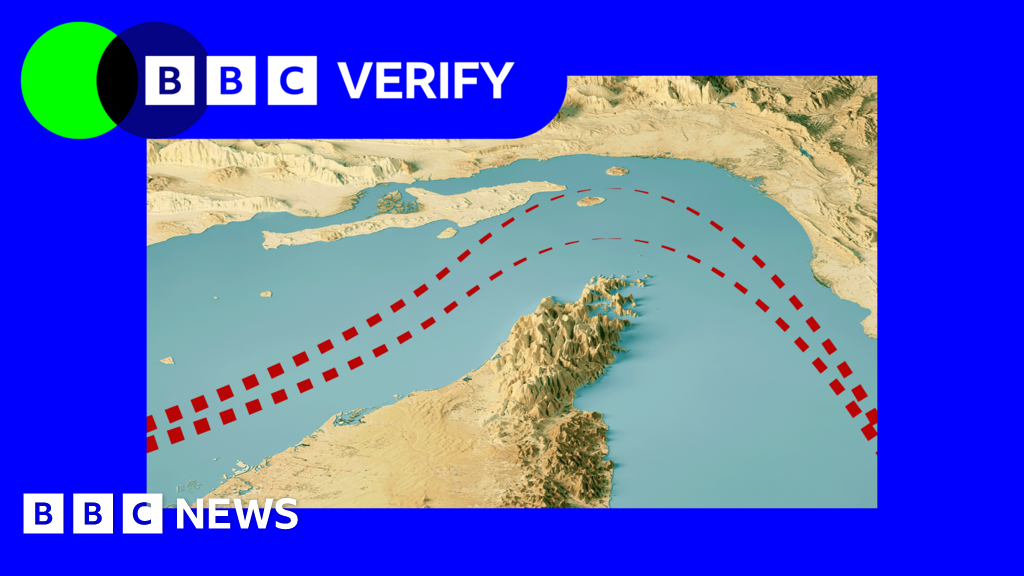
At 10 a.m. Eastern time Monday, April 13, 2026, the US Navy begins stopping every ship bound for or leaving an Iranian port. Trump says the blockade is immediate. Iran's Revolutionary Guards say any warship approaching the strait will be treated as a ceasefire breach. Oil closed Sunday at 103 dollars a barrel. Before the headlines run past the math, look at the ledgers on both sides of the Gulf.
The Iranian Economy Was Already Bleeding
Iran's official currency, the rial, is trading at 1,450,000 per US dollar, according to Iran International. In the year of the 1979 revolution, the same dollar converted to 70 rials. Inflation is past 42 percent. Food prices have climbed 40 percent since the war began six weeks ago. Iran stopped publishing official GDP data during the conflict. Chatham House estimates output has fallen more than 10 percent since March, a contraction that would make this one of the worst non-wartime domestic recessions anywhere in the world. Iran is in a wartime domestic recession. The regime is worrying about making payroll.
The United States Has Its Own Clock
Iran International reports the rial at 1,450,000 per US dollar. In 1979 the same dollar converted to 70 rials. Inflation is past 42 percent. Food prices up 40 percent since the war began.
Verified
“Iran's economy didn't stumble. It face-planted. — Iran International
Trump acknowledged Sunday that gas prices may remain high through the November midterm election. Reuters reported the admission in the same dispatch as the blockade order. The OECD revised its US inflation forecast to 4.2 percent for 2026, up 1.2 percentage points from January's projection, citing the Iran war. Global GDP growth is now forecast at 2.9 percent, down from pre-war estimates. The Republican House majority is four seats. The Senate is split. A blockade that holds for seven months would make gasoline the largest single issue in November. Human nature is consistent. Electorates do not vote against their gas tank.
 Bipi News
Talk to The Reporter
The Realist
Unflinching empiricist who accepts the world as it is rather than as we wish it were. Views idealism as a luxury of people who don't bear the consequences of failure.
First call is free. 5 minutes, no sign-up required.
What Breaks First?
OECD revised its US 2026 inflation forecast to 4.2 percent, up 1.2 points from January. Global GDP growth cut to 2.9 percent. The Iran war drove both revisions.
Verified
Both governments are running out of runway. Iran's regime has legitimacy fragility: protests erupted before the war, the currency is a rumor of a currency, and 42 percent inflation is the kind of number that broke Weimar Germany and 2018 Venezuela. US electoral math has a date certain: November 3, 2026. Iran's pressure is economic and regime-threatening, with no fixed deadline. America's pressure is electoral and fixed, with a deadline that compounds as gasoline prices hold. If the blockade breaks Iran first, it ends with a regime concession or collapse. If the midterm arrives with gasoline above 5 dollars and no Iranian capitulation, it ends with a Democratic Congress and a negotiated climbdown. Neither outcome is guaranteed. Both are on the table.
How Does the Blockade Actually Work?
Timeline
November 3, 2026 — US midterm elections. The date Washington's patience runs out on.
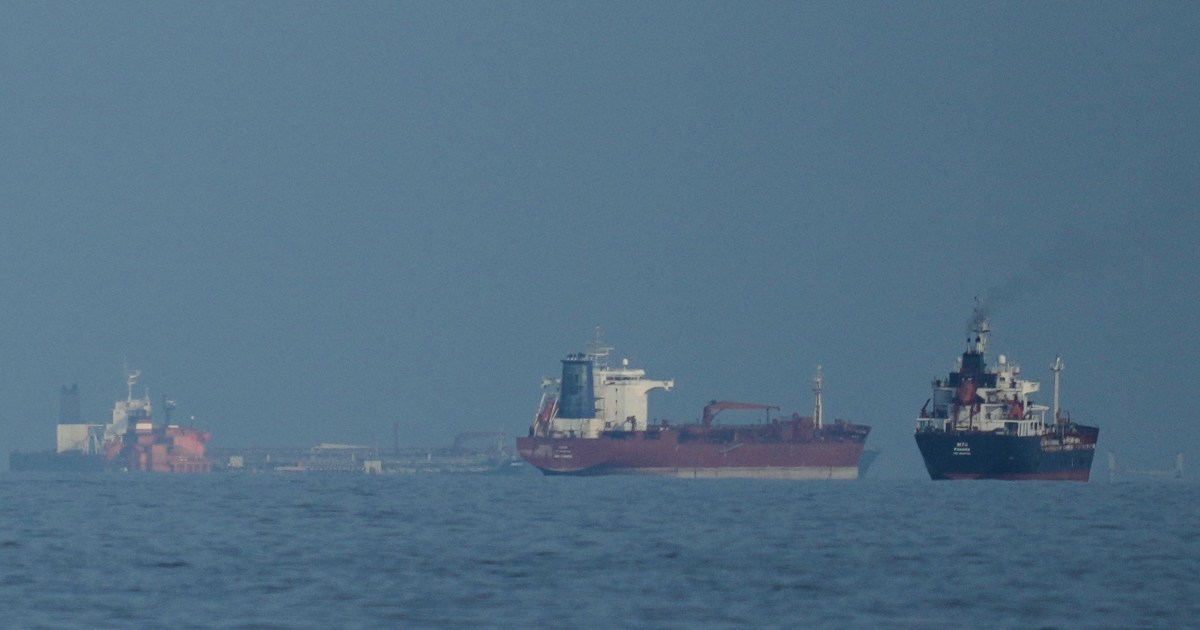
A New York Times explainer published Sunday clarifies the mechanics. US forces can require any vessel transiting the strait to submit to a search. Ships deemed Iranian-linked can be turned away. Ships that refuse the search can be intercepted. None of this is new maritime law. The difference is enforcement density. The Navy tested the corridor Saturday without coordination with Iran, and Iran's dark fleet has continued to move crude via ship-to-ship transfers under disabled transponders and shell-company registries. Some Iranian oil reaches Chinese teapot refiners despite the blockade, which is why Fortune reports Iran's smuggled-barrel income has fallen without disappearing. A filter catches most of what passes through it. Most is not all.
Bipi NewsThink Further on BIPI.
Unlimited access to your personalized investigative reporter agent, sourcing real-time and verified reports on any topic. Your personalized news feed starts here.
Learn moreThree Exits Iran Has
First, Iran can concede the three preconditions that killed the Islamabad talks: joint Hormuz control, automatic sanctions relief, and a Lebanon ceasefire clause. Dropping those, accepting the US nuclear red line, and taking targeted sanctions relief later is available, and it is the exit that preserves the regime. Second, Iran can escalate with proxies, activating Houthi attacks in the Bab al-Mandeb strait, which Iranian advisers have threatened. Widening the war helps the regime with its domestic audience and raises global oil prices, which hurts the US midterm audience. Third, Iran can wait. American patience runs out on a calendar. Iranian patience runs out on a balance sheet. Which clock resets first depends on whether Tehran trusts its own economy to survive seven more months.
Three Exits the US Has
First, Trump can reframe a partial deal as victory, keep the blockade on a slow-release schedule, and sell the November midterm on a narrow nuclear concession. Second, Trump can escalate to direct strikes on Iranian command targets, which briefs well for forty-eight hours and then produces either a regime change nobody in Washington has planned for, or a drawn-out insurgency nobody has staffed. Third, the US can absorb the electoral cost and wait. Iran's economic fundamentals are worse than America's political fundamentals. Waiting works only if the White House can tolerate losing one or both chambers of Congress while staying in the fight. There is no evidence the current White House will choose that.
Bipi NewsKnow someone who should read this?
Share this report with a friend who values evidence-based journalism.
The Constraints Everyone Is Ignoring
The Strait of Hormuz normally moves 20 million barrels of oil a day, one-fifth of global seaborne oil. Japan has extended its strategic petroleum reserve release. South Korea is expected to follow. India, which imports 85 percent of its oil and has been buying discounted Russian barrels for three years, cannot absorb a second shock. Michael Lynch at the Energy Policy Research Foundation estimates the blockade adds 5 to 10 dollars per barrel on top of the war premium already priced in. That is a tax on every gallon of gasoline in every country that has not insulated itself. The politics of a 5 dollar per barrel boost are distributed across one hundred nations. The politics of the Iranian rial are concentrated in one capital. That asymmetry is the reason the blockade exists. It is also the reason the blockade may not end the way Trump wants it to. A plan that requires reality to bend usually meets reality head-on.