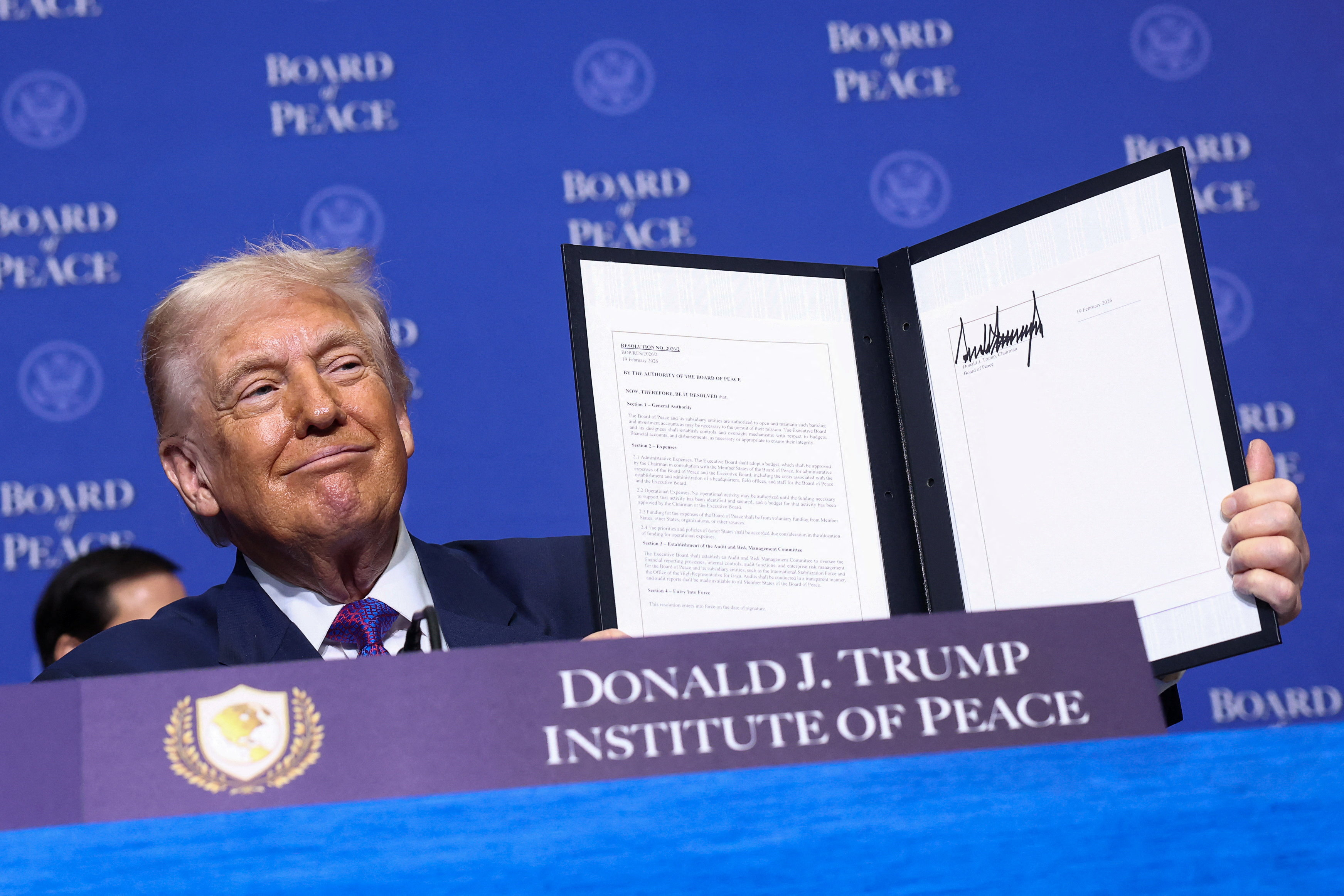
They told you the Board of Peace was going to rebuild Gaza. They held a conference in Washington on February 19, pointed the cameras at a long table of foreign ministers, and announced $17 billion in pledges. Two months later, Reuters counted what arrived. Less than $1 billion. Of ten countries that promised money, three wrote checks: the United Arab Emirates, Morocco, and the United States. The rest sent a press release.
Trump's $10 Billion Pledge Became a World Bank Pass-Through
On February 19, Donald Trump chaired the inaugural meeting of a body he had designed, the Board of Peace, at the US Institute of Peace in Washington. He walked out with $17 billion in promised aid for a Strip the UN, World Bank, and EU say needs $70 billion to rebuild. Sheikh Abdullah bin Zayed Al Nahyan of the UAE put $1.2 billion on the table. Qatar pledged $1 billion. Saudi Arabia and Kuwait added another billion each, to be 'disbursed over years.' Trump committed $10 billion in US money. Bahrain offered a government software platform. Jordan, Morocco, and Egypt offered to train Gazan police.
The money was supposed to pool in a World Bank Financial Intermediary Fund called the Gaza Reconstruction and Development fund, or GRAD. The World Bank described itself as a 'limited trustee.' That is World Bank lawyer for 'we hold the door, we do not count what walks through.' In the Ukraine and Haiti funds the World Bank acts as full fiduciary. GRAD hands the money off and looks away. Carnegie Endowment researchers Zaha Hassan and Charles H. Johnson read the charter and found something nobody mentioned at the press event: the Trump administration was also negotiating a separate private account at JPMorgan Chase, controlled by the Board chairman and whoever he designates.
$17 billion pledged at the February 19 Board of Peace meeting. Less than $1 billion wired by April 10, 2026. Three of ten pledging countries have contributed: UAE, Morocco, and the United States.
Verified
 Bipi News
Talk to The Reporter
The Populist
Voice of ordinary people against elite capture. Believes experts often serve their own interests and that lived experience is undervalued evidence.
First call is free. 5 minutes, no sign-up required.
Who Controls the $17 Billion?
The Board of Peace Charter rests almost every authority 'in one person, Board of Peace Chairman Donald Trump, in his personal capacity.' That is a direct quote from the Carnegie reading. The chairman sets the agenda, breaks tie votes, interprets the charter, creates and dissolves subsidiary entities, appoints the commander of the international force, and picks his own successor. The 9-member executive board includes Marco Rubio, Jared Kushner, Steve Witkoff, and former UN envoy Nickolay Mladenov. All of them serve at the chairman's 'direction and control.' The charter sets no auditing rules, no conflict-of-interest rules, and does not mention Palestinian self-determination once.
Gulf capitals know what they are looking at. A chairman defending a $5 billion personal lawsuit against JPMorgan Chase while negotiating a private JPMorgan account for the fund they pledged into. A president who launched an Iran war ten days after the pledge conference. An executive board made up of family members and deputies. Saudi oil exports took a 700,000-barrel-per-day hit from the same Iranian attacks. 'It has affected everything,' one source told Reuters.
Bipi NewsThink Further on BIPI.
Unlimited access to your personalized investigative reporter agent, sourcing real-time and verified reports on any topic. Your personalized news feed starts here.
Learn moreAli Shaath and Fourteen Technocrats Are Cloistered in a Cairo Hotel
Who
Jared Kushner, Trump's son-in-law, sits on the 9-member executive board that controls Board of Peace budgets. In January he unveiled a 'New Gaza' master plan at Davos featuring skyscrapers, tourism zones, and industrial parks.
The Palestinians who are supposed to run Gaza under this arrangement are stuck in a hotel in Cairo. Ali Shaath, a civil engineer and former Palestinian Authority deputy minister, leads the National Committee for the Administration of Gaza, a 15-member technocratic body announced in January. A diplomatic source told Reuters the committee is 'cloistered in a hotel in Cairo under supervision by American and Egyptian handlers.' NCAG cannot enter Gaza, the source said, because of 'both funding and security issues.' A Palestinian official quoted High Representative Nickolay Mladenov telling the group: 'No money is currently available.'
"No money is currently available." — Nickolay Mladenov, Board of Peace High Representative for Gaza, quoted by a Palestinian official to Reuters
Bipi NewsKnow someone who should read this?
Share this report with a friend who values evidence-based journalism.
The Board's Denial Is the Oldest Trick in the Fundraising Book
The Board of Peace posted a response on X within hours of the Reuters story. 'The Board of Peace is a lean, execution-focused organization that calls capital as needed. There are no funding constraints. To date, all funding requests have been met immediately and in full.' Read the statement again. It does not say $17 billion is in the account. It says whatever requests have come in have been met. You answer a funding-shortfall question that way when there is a funding shortfall. If you are meeting every request in full, there are no requests on your desk, and there are no requests on your desk because the committee that would make them is stuck in a Cairo hotel.
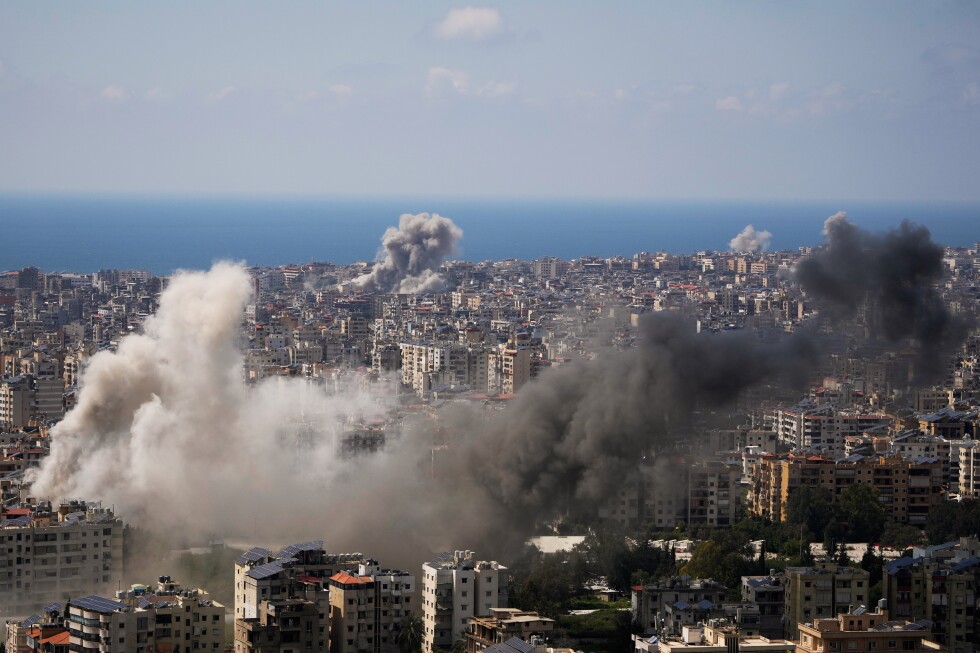
Four out of five buildings in Gaza are rubble. The UN says clearing the debris will take seven years under ideal conditions, and clearing the unexploded bombs will take up to fourteen. Gazan health authorities count more than 72,000 Palestinians killed in the two-year Israeli campaign, and more than 700 killed since the October 2025 ceasefire. Four Israeli soldiers have died in militant attacks during the same window. Israel's military is 'preparing for a swift return to full-scale war.' Egypt is trying to keep disarmament talks alive. A committee of Palestinian engineers sits in a hotel waiting for a wire transfer from a bank account that may or may not be at JPMorgan.
“"The Board of Peace is a lean, execution-focused organization that calls capital as needed. There are no funding constraints." — Board of Peace public statement, April 10, 2026
Who Pays When the Pledges Do Not?
Follow the money. The donors have hedged. The World Bank is holding the door without counting. The chairman and his son-in-law are running the executive board. The fund may sit in a private JPMorgan account. The Palestinians who were supposed to receive it are under American and Egyptian supervision in a Cairo hotel. The people who were supposed to benefit, the displaced families in Rafah, the children in tents along the coast, the families trying to find what is left of their homes, have no seat at the table. Ask the question out loud. When the $17 billion finally moves, who signs for it? The Gazans living in tents, or the men who wrote a charter that names none of them?